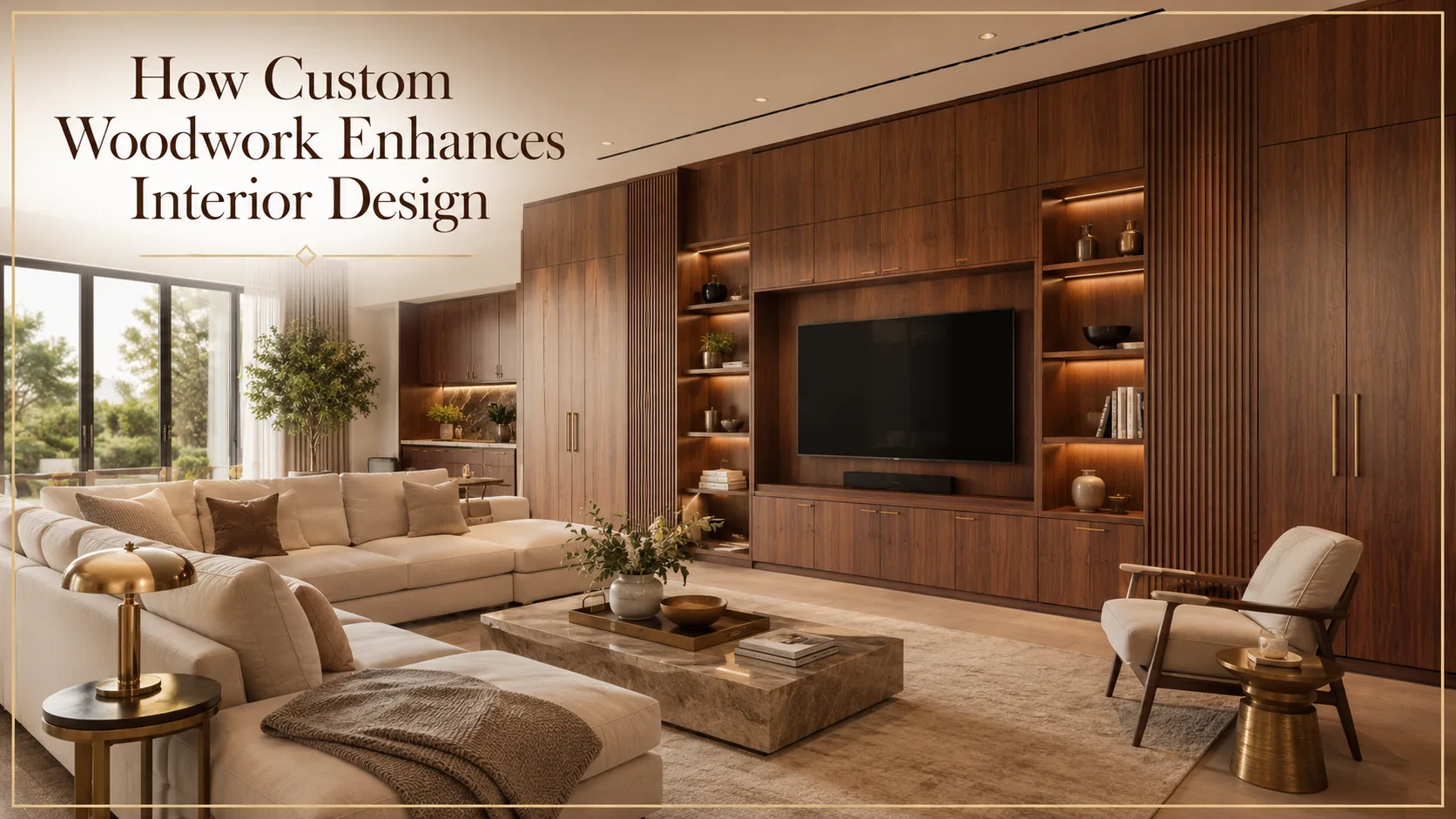
Custom woodwork gives a home a more tailored look because each piece fits the room, the storage needs, and the overall design. From built-in cabinets and wall panels to custom doors and shelving, woodwork adds both function and visual detail that standard furniture cannot replicate.
Plan it before the room gets finished, not at the end. A space with custom woodwork feels designed from the start rather than assembled piece by piece.
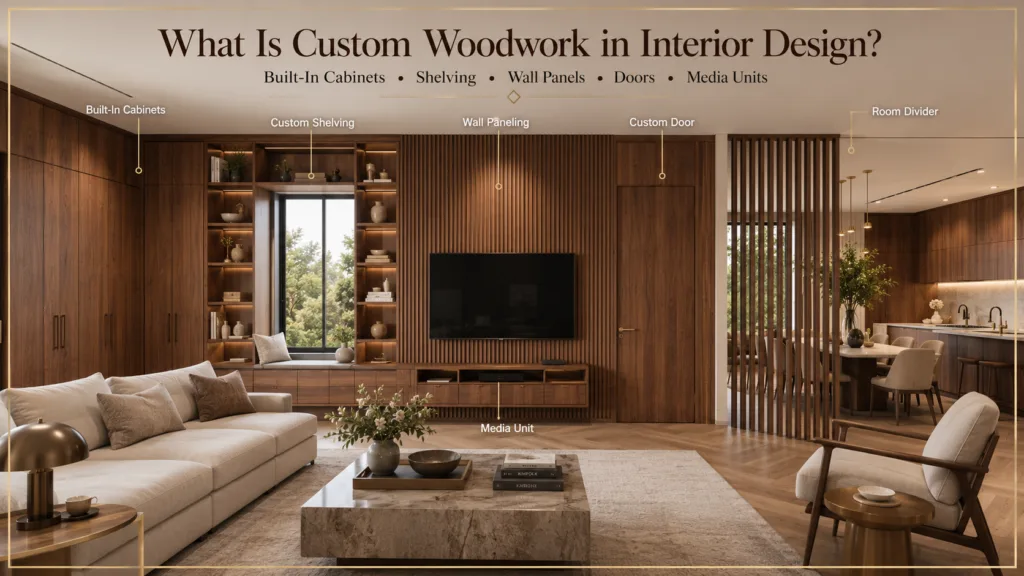
What Is Custom Woodwork in Interior Design
Custom woodwork means wooden elements made specifically for one room or building. Each piece is planned around the room’s dimensions, layout, and style rather than cut to a standard size.
Common examples include:
- Built-in cabinets and kitchen cabinetry
- Custom shelving built around windows and doors
- Wall paneling and feature walls
- Wardrobes and bedroom built-ins
- Custom interior doors and frames
- Media units and entertainment walls
- Wood room dividers and partitions
How Custom Woodwork Enhances Interior Design
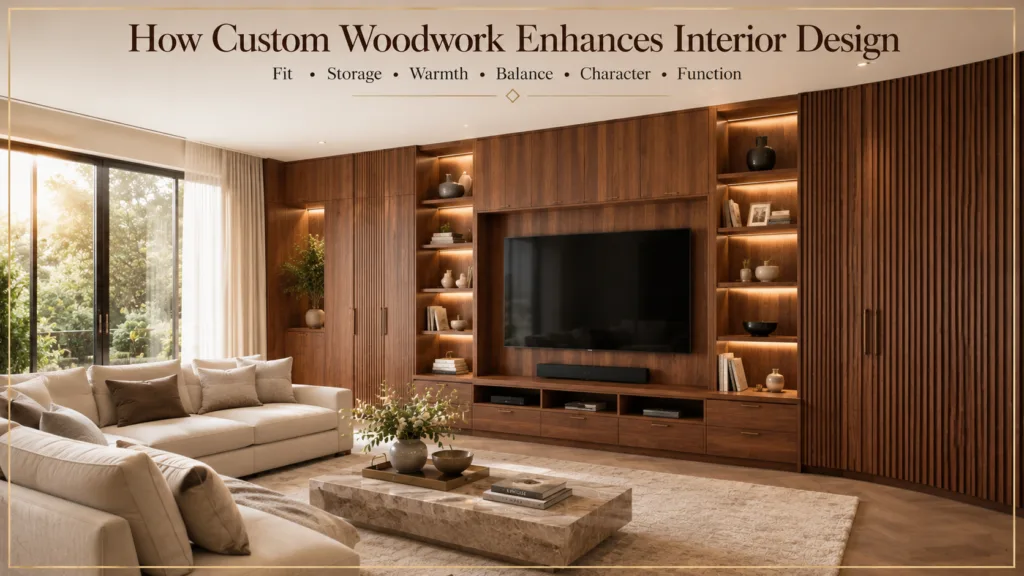
- Fits the room. Custom pieces match exact wall sizes, corners, and angles that standard furniture leaves as dead space
- Adds storage. Built-ins provide storage without taking extra floor space away from the room
- Adds warmth. Natural wood brings texture and a warmer feel to rooms dominated by concrete, glass, or metal
- Creates visual balance. Matching timber finishes across different areas make a home feel like one considered plan
- Adds character. Panels, doors, and trim give plain surfaces detail and depth without extra decor
- Supports daily use. Cabinets and built-ins match how a person actually uses the room rather than forcing a generic layout
10 Custom Woodwork Ideas for Your Home
Each idea below focuses on one specific application. The goal is a practical starting point, not a general list of benefits.
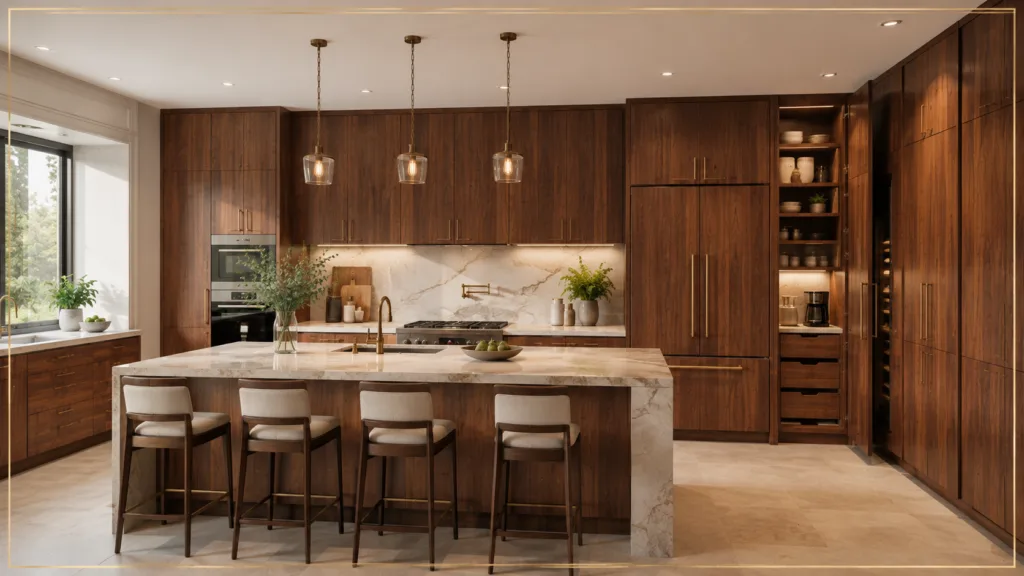
Custom Kitchen Cabinets
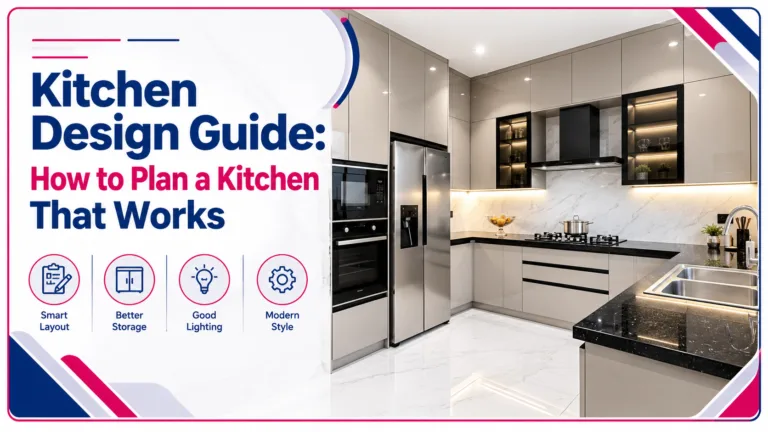
Custom kitchen cabinets fit around appliances, corner spaces, and existing plumbing points that stock cabinets cannot reach. Choose a finish that matches the countertop and flooring rather than selecting cabinets first. A well-planned layout reaches every corner without leaving unusable gaps.
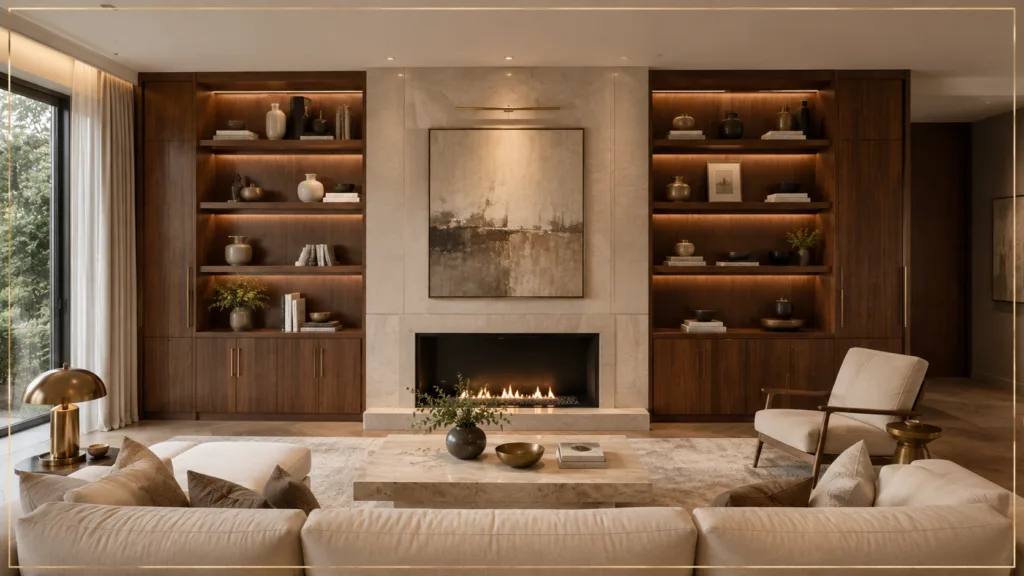
Built-In Living Room Shelves
Built-in shelves on either side of a fireplace or TV wall use space that usually goes empty. They store books, objects, and media equipment while keeping the room open. Build them to ceiling height to use the full wall and draw the eye upward.
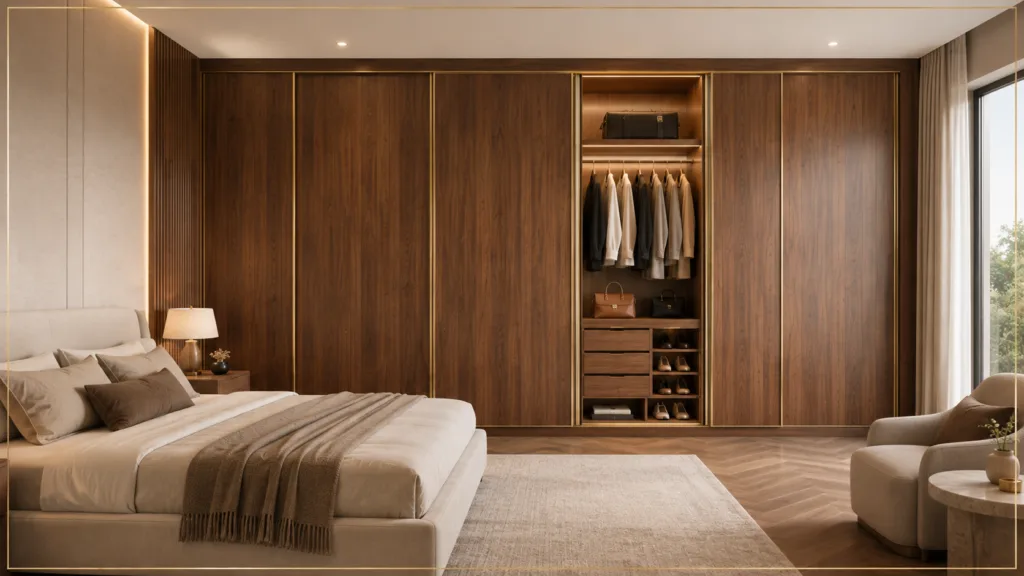
Custom Bedroom Wardrobes
A built-in wardrobe uses the full width of a wall rather than leaving gaps on each side of a freestanding unit. Design the interior layout around what you actually store — clothes, shoes, and accessories — rather than accepting a standard shelf configuration. Sliding doors keep the room open without needing swing clearance.
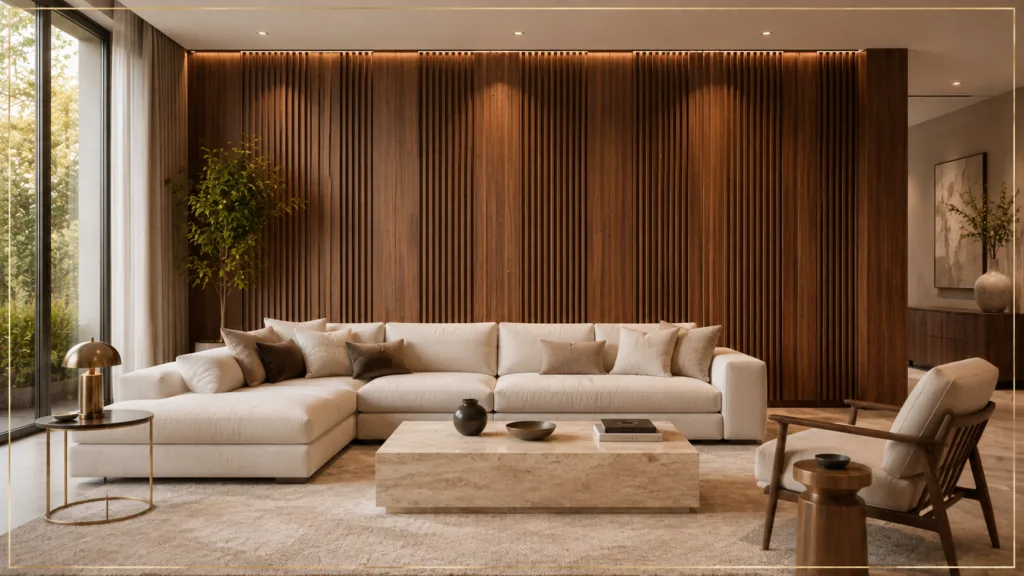
Wood Wall Paneling
Timber panels behind a bed, sofa, or dining table add depth and texture without extra decor. Fluted and reeded panel profiles add movement and detail to a flat wall without paint or pattern. Panels work in both warm and cool timber tones.
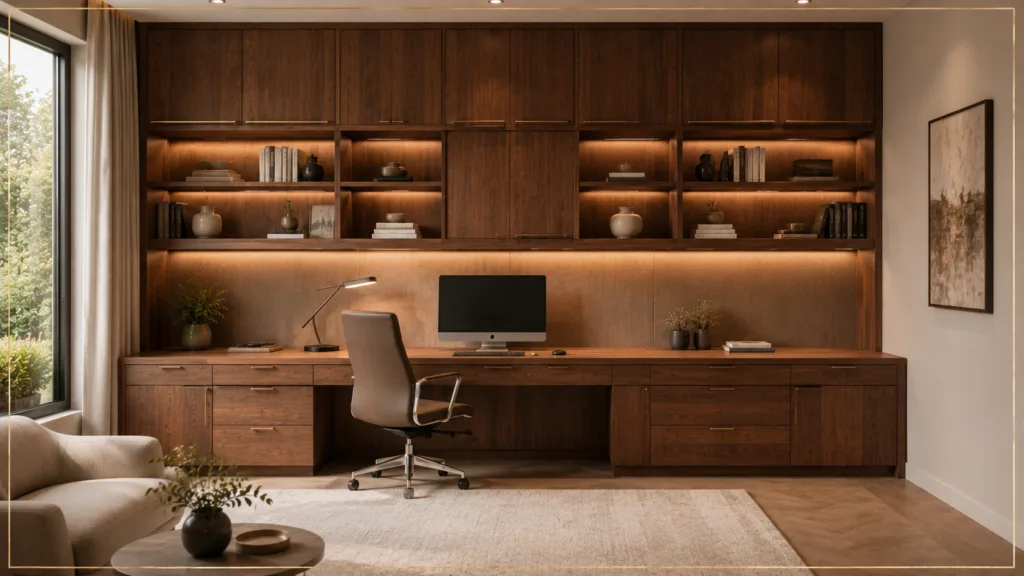
Home Office Built-Ins
A built-in desk wall with shelves above and filing drawers below removes the need for separate furniture and keeps the workspace organized. Build cable management channels directly into the unit so wires stay off the desk surface. The full wall treatment makes even a small room feel like a dedicated working space.
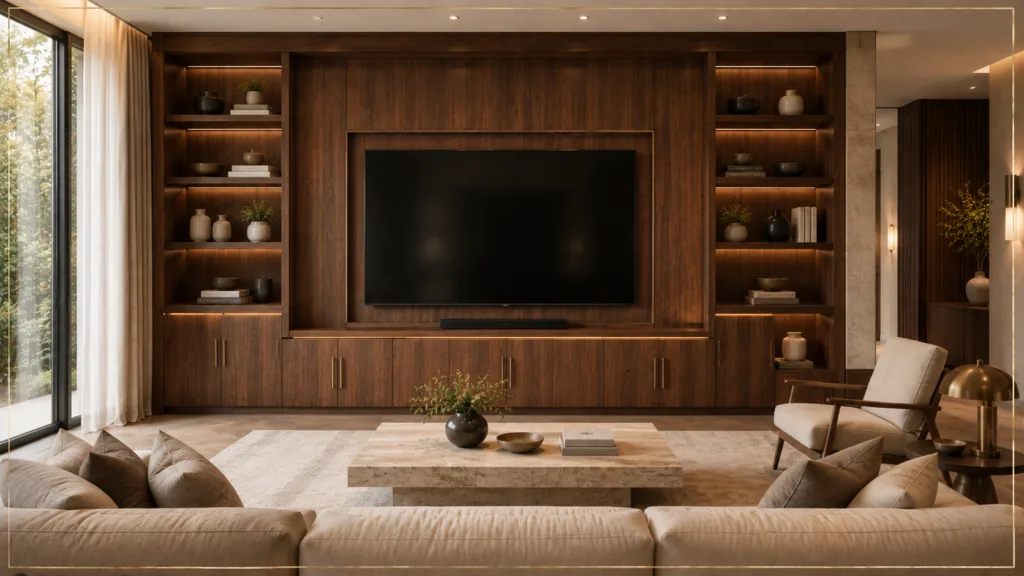
Custom Media Wall
A custom media wall recesses the TV into the unit with shelving on both sides and storage below. This removes the TV stand and gives every piece of media equipment a designated place. Match the finish to the rest of the room rather than treating the media wall as a separate design choice.
Entryway Storage
A full-length entryway built-in with shoe storage below, coat hooks at shoulder height, and a shelf above uses every inch of wall space that usually holds nothing.
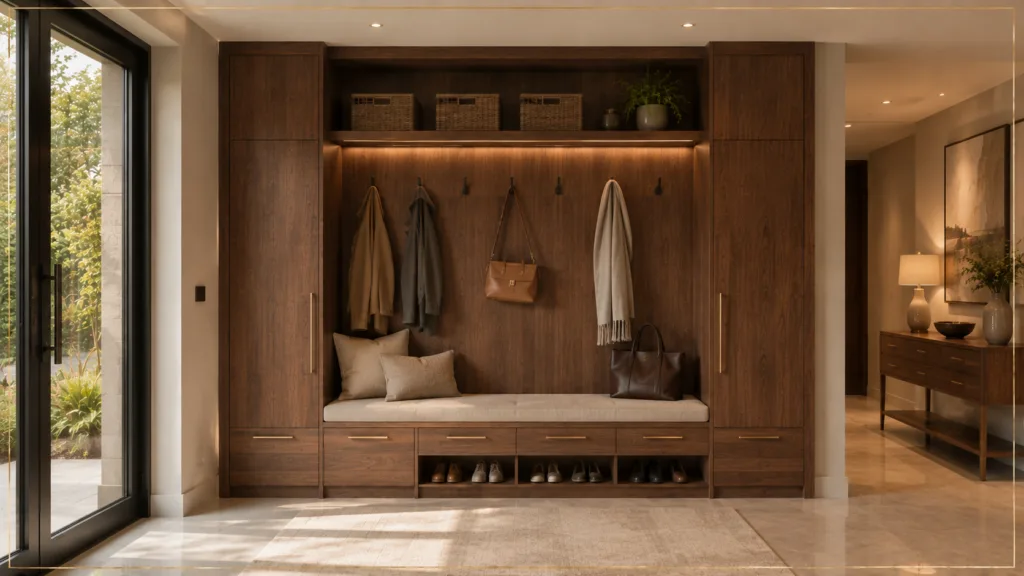
It keeps the entryway clear of scattered shoes and bags and creates a clean first impression without a separate console table or coat stand.
Custom Interior Doors
Custom doors match the exact height of the room rather than leaving a gap above a standard-height door frame. Ceiling-height doors make rooms feel taller.
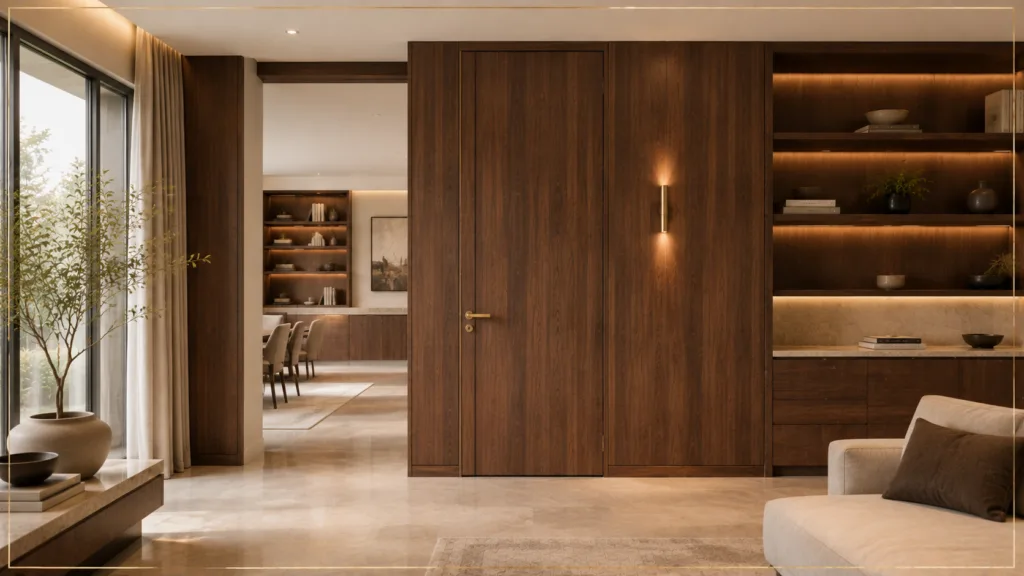
Matching door profiles to the wall paneling or cabinetry in adjacent rooms gives the interior a consistent finish throughout.
Built-In Dining Storage
A built-in sideboard or drinks cabinet in the dining room stores tableware, glasses, and linens at counter height.
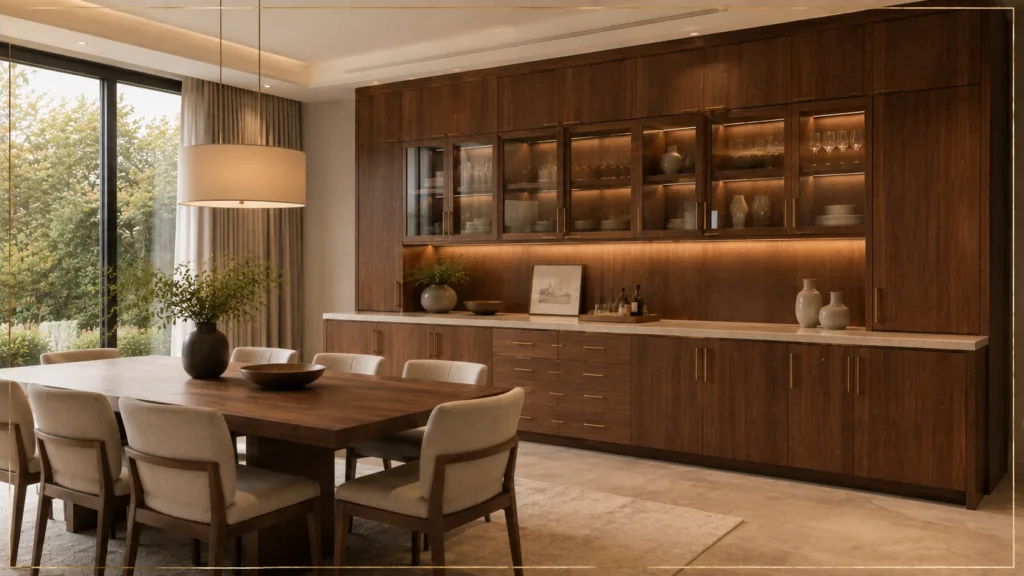
This creates a serving surface while keeping the dining area open. Keep the doors flat-front or add glass panels to display ceramics or glassware.
Custom Bathroom Vanity
A custom bathroom vanity fits the room’s exact width, eliminating gaps on either side of a freestanding unit.
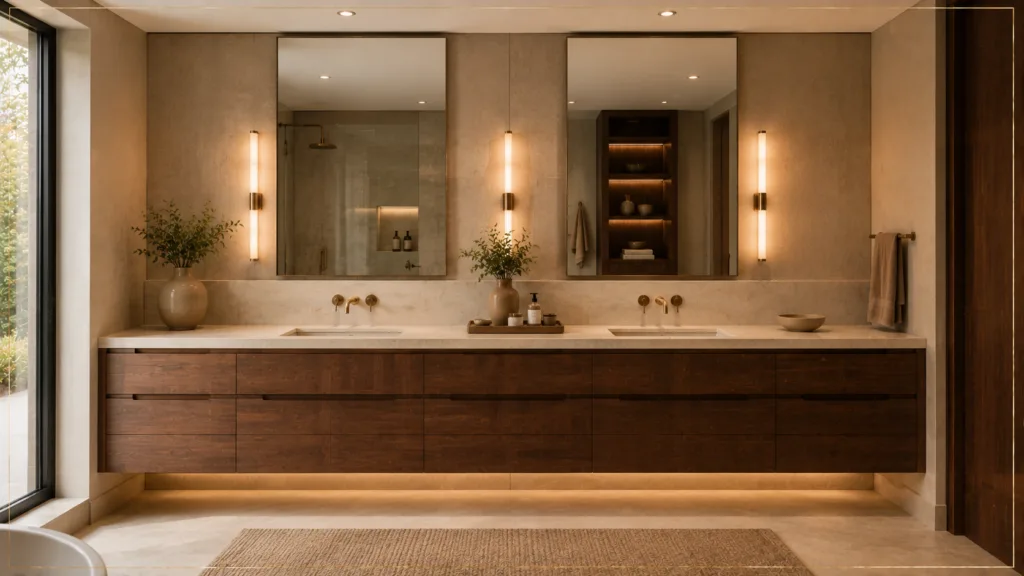
Build in storage for toiletries, towels, and cleaning products behind closed doors to keep the counter clear. Choose a moisture-resistant finish and sealed joints at the wall and floor to prevent water damage.
Custom Woodwork Ideas by Room
| Room | Useful Woodwork |
| Kitchen | Cabinets, pantry units, island |
| Living room | Shelves, media units, paneling |
| Bedroom | Wardrobes, headboard walls |
| Home office | Built-in desk, shelving |
| Dining room | Sideboard, built-in cabinet |
| Entryway | Bench, shoe storage, coat hooks |
| Bathroom | Vanity, recessed storage niches |
Popular Custom Woodwork Styles
| Style | Common Features |
| Modern | Clean lines, flat-front panels, minimal hardware |
| Traditional | Raised panels, molding, decorative trim |
| Minimalist | Simple forms, hidden storage, handle-free doors |
| Rustic | Visible grain, natural finishes, reclaimed timber |
| Contemporary | Mixed materials, simple shapes, integrated lighting |
| Luxury | Detailed finishes, fluted profiles, premium hardware |
How to Choose the Right Wood and Finish
| Wood | Character | Best For |
| Oak | Durable, open grain, versatile | Cabinets, floors, paneling |
| Walnut | Dark, rich, strong | Feature pieces, media walls |
| Maple | Smooth, light, consistent | Painted cabinets, modern interiors |
| Cherry | Warm tone, deepens with age | Traditional and luxury pieces |
| Ash | Clear grain, light color | Contemporary built-ins |
| Pine | Affordable, softer grain | Budget projects, rustic style |
| Sheesham | Dense, durable, natural pattern | Popular choice in Pakistan for built-ins |
Choose the Finish Based On
- Room style and existing furniture tones
- Natural light levels in the room
- Daily use and cleaning frequency
- Moisture levels — bathrooms and kitchens need sealed finishes
- Whether the piece gets painted, stained, or left natural
Custom Woodwork vs Ready-Made Furniture
| Feature | Custom Woodwork | Ready-Made Furniture |
| Size | Made for the exact space | Standard fixed sizes |
| Design | Full design choices | Fixed designs |
| Storage | Fits unusual areas and dimensions | Fixed storage configuration |
| Materials | Wide material options | Limited to what is in stock |
| Cost | Often higher upfront | Often lower upfront |
| Installation | Room-specific and fitted | Usually simpler and faster |
Sustainable Custom Woodwork
The Forest Stewardship Council certifies timber from responsibly managed forests. Ask your supplier for FSC-certified stock before committing to any project.
- One built-in wall replaces three or four separate furniture pieces, which reduces total material use
- Well-built joinery lasts 20 to 30 years, producing less waste than cheaper furniture replaced every 5 to 7 years
- Reclaimed timber gives character and reduces demand for newly felled wood
How Much Does Custom Woodwork Cost
The cost depends on several factors that vary by project, material, and location.
Main cost factors:
- Wood or material — solid wood costs more than plywood or MDF
- Size — larger built-ins need more material and labor time
- Design complexity — detailed profiles and routed edges take longer to produce
- Hardware — hinges, handles, drawer slides, and specialty fittings add to the total
- Finish — paint, stain, veneer, and lacquer carry different price points
- Installation — complex fitting in tight or awkward spaces increases labor cost
- Location — labor rates vary significantly by city and region
What increases cost further:
- Custom shapes or curved forms
- Built-in lighting channels or charging points
- Premium hardware and specialty fittings
- Large wall units spanning ceiling height
- High-end timber species or matched grain veneers
Custom woodwork built to last 20 years or more often costs less per year of use than furniture replaced every 5 to 7 years.
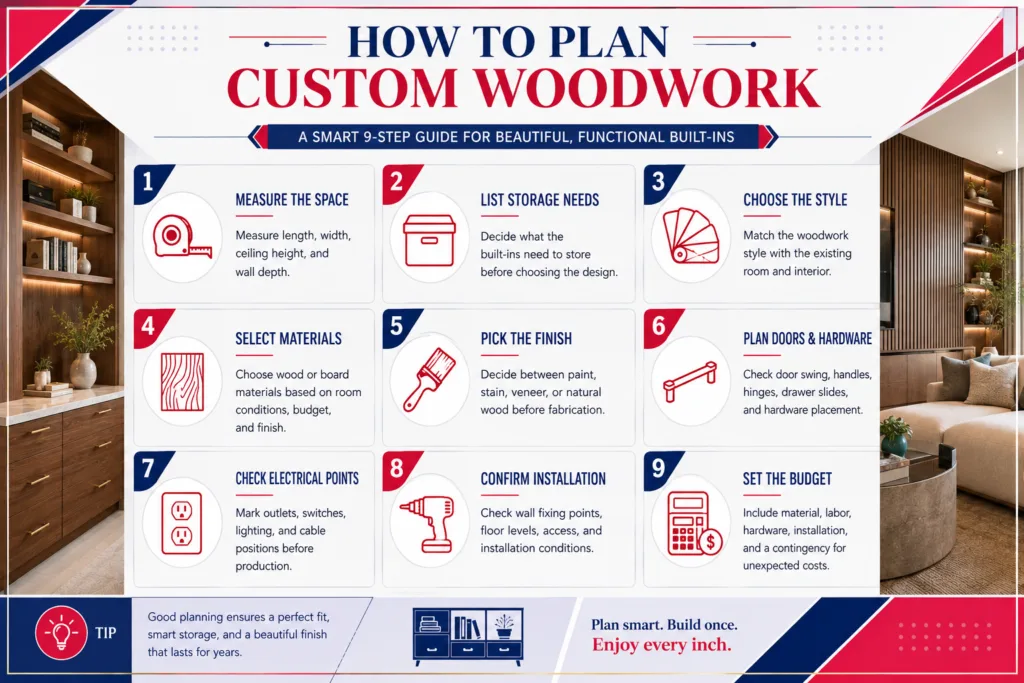
How to Plan Custom Woodwork
Measure your space, define your needs, and choose the right design.
Plan materials, finishes, hardware, installation, and budget before you build.
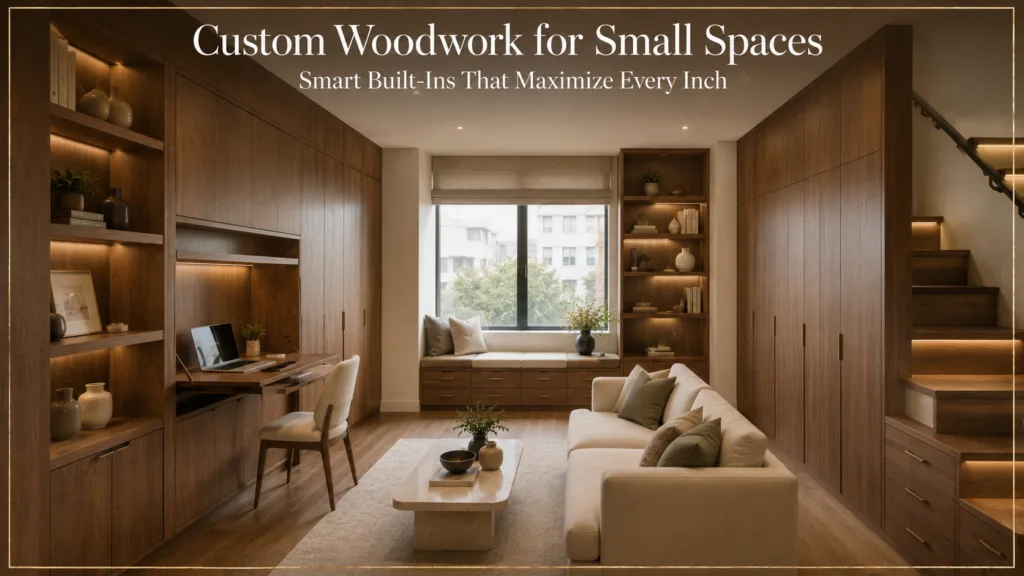
Custom Woodwork for Small Spaces
Small rooms benefit most from custom woodwork because fitted pieces use every available inch without adding visual bulk.
- Floor-to-ceiling cabinets — use the full wall height instead of leaving space above standard cabinet height
- Corner shelving — turns unused corners into storage or display space
- Built-in desks — fold-down or fitted desk walls free the room when not in use
- Under-stair storage — drawers and cabinets in the stair void use space that usually holds nothing
- Window-seat drawers — a bench seat below a window with storage inside uses the wall recess productively
- Narrow wardrobes — a 12-inch deep wardrobe on a short wall stores far more than a freestanding unit the same width
- Hidden storage — cabinets built flush with the wall with push-to-open doors leave no visual footprint
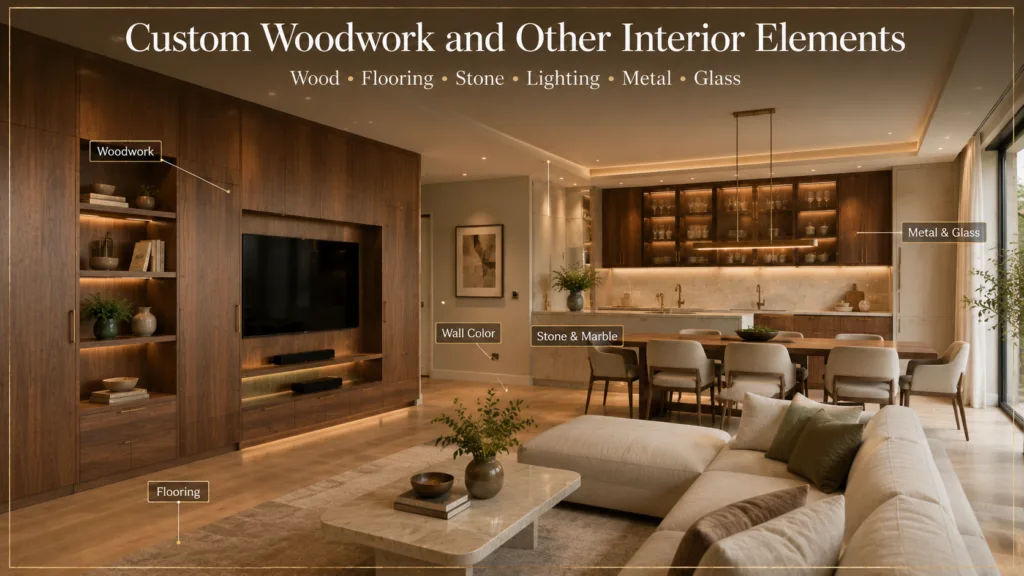
Custom Woodwork and Other Interior Elements
Woodwork works best when it connects with the other materials in the room.
- Flooring — match warm timber tones in built-ins to warm wood or stone floors. Cool-toned timber suits concrete, tile, or light oak floors
- Wall colors — light timber works with white, cream, and soft gray walls. Dark timber suits deeper wall tones or acts as the accent against a neutral room
- Lighting — wood grain reads differently under natural daylight and warm artificial bulbs. Plan the lighting alongside the woodwork before installation
- Stone and marble — walnut cabinetry paired with marble countertops works well in 2026 interiors. The warm grain of the timber contrasts with the cool, veined surface of the stone
- Metal hardware — warm timber suits brass and bronze hardware. Cool or painted timber suits brushed nickel, matte black, or chrome
- Glass — glass panels in upper cabinet doors reduce the visual weight of a large built-in unit
Common Custom Woodwork Mistakes
- Taking measurements too quickly and missing wall angles, skirting boards, or ceiling height variations
- Choosing the wrong material for the room’s moisture level — untreated timber in a bathroom or kitchen fails fast
- Making cabinets too deep and losing access to items at the back without a clear reason for the extra depth
- Ignoring door and drawer clearance against walls, adjacent furniture, or each other
- Using too many wood finishes in one room — matching or coordinating finishes reads more considered
- Blocking windows or electrical outlets with built-in units placed without checking the wall first
- Forgetting interior cabinet lighting in deep units where the back is not visible from outside
- Choosing appearance over daily use — a piece that looks good but does not work for the room is a poor investment
- Not checking hardware quality before installation — cheap hinges and slides fail faster than the wood itself
- Skipping a detailed installation plan and discovering site problems after fabrication is complete
How to Maintain Custom Woodwork
- Dust surfaces regularly with a soft dry cloth
- Clean spills immediately before moisture reaches the timber or finish
- Avoid excess water on wood surfaces, especially around joints and edges
- Use cleaning products suited to the finish type — mild soap for painted or lacquered pieces, oil for oiled surfaces
- Keep surfaces away from direct heat sources, including radiators and cooking equipment
- Check hinges and drawer slides annually and tighten or lubricate as needed
- Repair small scratches early to protect the timber underneath from moisture
- Re-oil oiled surfaces annually, and re-lacquer lacquered pieces every 3 to 5 years depending on wear
Is Custom Woodwork Right for Your Home
Custom woodwork can make awkward spaces work better. It also gives you storage and built-ins that fit your home. Ready-made furniture can make more sense when you need a faster, simpler, or more flexible option.
Custom woodwork may suit you if:
- Your room has unusual dimensions that standard furniture does not fill cleanly
- You need specific storage that generic cabinets cannot provide
- You plan to stay in the home long term and want pieces that last
- You want matching built-ins that read as part of the architecture
- Standard furniture leaves gaps, dead corners, or unusable wall space
Ready-made furniture may work better if:
- You have a tight budget and need to furnish quickly
- You rent your home and cannot make permanent changes
- You move often and need furniture that comes with you
- Standard sizes already fit your space without gaps or wasted corners
- You want faster installation without a fabrication lead time
Final Thoughts
Custom woodwork works best when it solves a specific problem in a specific room. The right fit, the right material, and the right carpenter — chosen for the room’s conditions and daily use — produce built-in pieces that look considered and function well for decades. Get the planning right before fabrication starts, and everything else follows.
Thinking about custom woodwork for your next renovation? Contact our team for a free consultation and estimate based on your room size and material choice.
Frequently Asked Questions
What is custom woodwork in interior design?
Custom woodwork means wooden elements — cabinets, shelving, panels, and doors — made to fit one specific room’s exact dimensions and design requirements rather than manufactured to standard sizes.
How does custom woodwork improve a home?
It uses dead corners and unused wall space, adds storage without extra furniture, and makes a room feel planned rather than assembled.
What are common types of custom woodwork?
Kitchen cabinets, built-in wardrobes, wall paneling, custom doors, and media walls — any wooden element built to fit a specific room.
Which wood is best for interior projects?
Oak suits most applications for its durability and versatility. Plywood with veneer handles most built-in wardrobe and cabinet work at a lower cost than solid timber.
Is custom woodwork expensive?
It costs more upfront than ready-made furniture, but well-built joinery lasting 20 or more years often costs less per year of use than furniture replaced every 5 to 7 years.
How much does custom cabinetry cost?
The cost depends on material, size, finish, hardware, and local labor rates. Get a written itemized quote from a local carpenter based on your room dimensions and design before setting a budget.
Is custom woodwork better than ready-made furniture?
For rooms with unusual dimensions or specific storage needs, yes. For rentals or spaces where standard sizes fit cleanly, ready-made furniture is the practical choice.
Can custom woodwork work in a small room?
Yes. Small rooms benefit most because custom pieces fill corners, use ceiling height, and work within recesses that standard furniture wastes.
How long does custom woodwork last?
Well-built joinery made from quality timber or plywood with a proper finish lasts 20 to 30 years with basic maintenance.
How do you maintain wooden built-ins?
Dust regularly, clean spills immediately, use the correct product for the finish type, and re-oil or re-lacquer surfaces on schedule depending on wear.
Can custom woodwork increase home value?
Yes, particularly in kitchens and primary bedrooms where buyers notice built-in storage quality and finish consistency.
How do I plan a custom woodwork project?
Measure the space, list your storage needs, choose the style and material, confirm outlet and lighting positions, and get a written quote that separates material and labor before fabrication begins.