A beautiful room can still feel uncomfortable when the layout does not work. Chairs may sit too far apart, a walkway may feel tight, or poor lighting may make the room hard to use. You may even run out of places to store everyday items.
Good interior design starts with how people use a space. Function, comfort, proportion, lighting, color, materials, and personal style all shape the final result. This guide explains what matters most in interior design, how to plan a room, what mistakes to avoid, and how furniture, finishes, and budget affect the design.
What Is the Most Important Thing in Interior Design?
The most important thing in interior design is creating a space that works well for the people who use it. Good design starts with function, then adds comfort, style, lighting, color, furniture, and materials. Think about how people use the room each day.
A family room needs comfortable seating, while a home office needs a useful desk and good light. Start with a clear layout and enough storage. Once the room works well, add colors, textures, and personal details that make it feel like home.

Why Is Functionality Important in Interior Design?
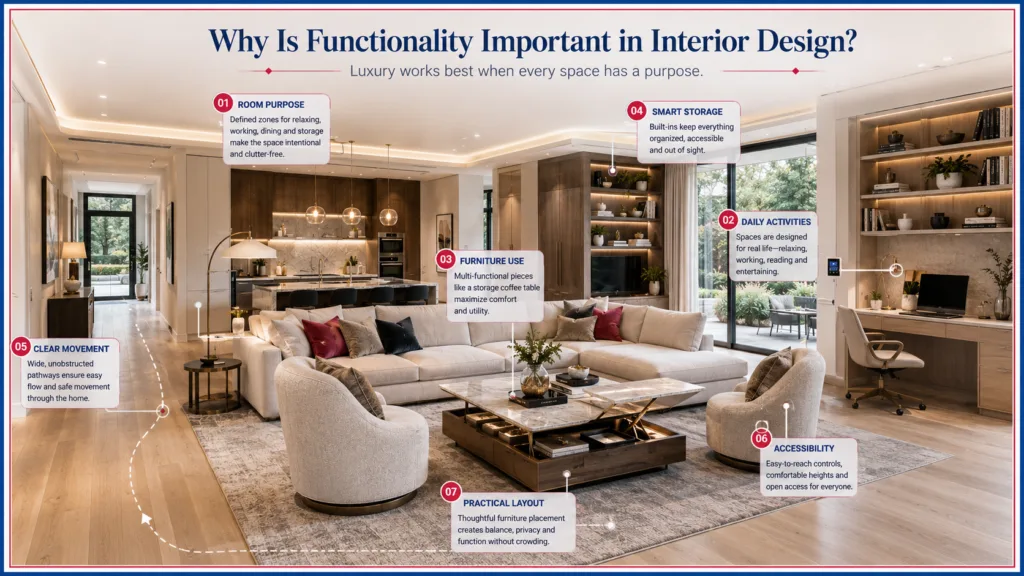
Functionality helps a room support the activities people do every day. A functional interior gives each piece of furniture a clear job, keeps movement easy, and offers enough storage. It also fits the needs of the people who use the room.
- Room purpose: Decide what the room is for before you buy anything.
- Daily activities: List what happens there, such as cooking, working, or resting.
- Furniture use: Pick pieces you will use often.
- Storage: Give every item a home.
- Movement: Keep paths clear.
- Accessibility: Make sure children and older adults can move safely.
- Practical layout: Keep daily items within easy reach.
What Makes a Room Functional?
A functional room has easy movement, useful furniture, and enough storage. It has clear activity areas, such as a reading corner or a homework spot. Everything you need stays within reach. If you never trip, hunt, or squeeze past a chair, the room works.
How Does Space Planning Improve Interior Design?
Space planning improves interior design because it puts every item in the right place before you buy or move anything. It makes a room easier to use and nicer to look at. Follow these steps:
- Measure the room, including ceiling height.
- Mark the doors and windows.
- Note fixed features, such as vents, outlets, and radiators.
- Define the room’s purpose.
- Plan traffic flow from door to door.
- Create activity zones, such as a seating zone and a work zone.
- Place the largest furniture first.
- Check circulation space so people can walk without bumping into things. Leave about 3 feet for main walkways.
- Sketch a floor plan on paper first. Moving furniture on paper costs nothing.
What Are the Key Elements of Good Interior Design?
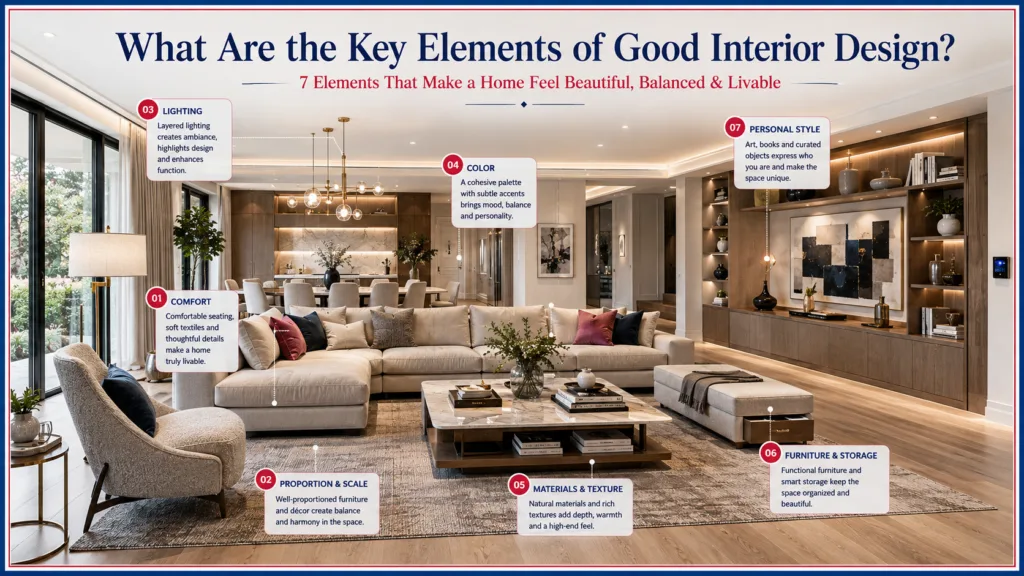
Good interior design uses seven key elements. Each one supports the others.
Comfort
Comfort decides whether people enjoy a room. Choose seating that supports your back and fits your body. Check room temperature and noise, too. Soft rugs and curtains reduce echo. A chair that hurts after ten minutes will hurt more next year.
Proportion and Scale
Furniture must fit the room and each other. A huge sofa crowds a small room. A tiny rug makes a big room feel cut up. Match the rug to the seating area, and hang art at eye level. Tall ceilings can handle tall pieces. Low ceilings need lower ones.
Lighting
Layer your light. Use natural light first, then add ambient light for an overall glow. Task lighting helps you read or cook. Accent lighting highlights art or a favorite wall. One ceiling fixture is rarely enough.
Color
Pick one base color, one supporting color, and one accent color. A neutral palette keeps things calm. Add small pops of accent color in pillows or art. Wall colors set the mood, so test paint samples in your own light.
Materials and Texture
Mix materials to add depth. Wood feels warm. The stone feels solid. Metal and glass add shine. Fabric softens a room. Pair smooth surfaces with rough ones so the space does not look flat.
Furniture and Storage
Choose furniture that does a job. A bench with storage beats a plain bench. Built-in storage, cabinets, and shelves keep clutter out of sight. Hidden storage, such as an ottoman with a lid, works well in small rooms.
Personal Style
Your home should show who you are. Display artwork, family photos, books, and objects you love. Cultural pieces and personal collections tell your story.
How Do You Choose Furniture for an Interior?
Choose furniture by measuring first, then matching each piece to the room’s size and purpose.
- Measure before you buy, including doorways and stairs.
- Match furniture size to the room.
- Ask what job the piece will do.
- Sit in it and check the comfort.
- Leave walking space around each piece.
- Choose storage furniture where it helps.
- Match materials and colors to what you already own.
Living room furniture should invite conversation. Bedroom furniture should support rest. Dining furniture should seat your usual guests.
How Does Lighting Affect Interior Design?
Lighting shapes how a room looks and feels. Natural light makes a space feel open, so keep windows clear. Ambient lighting fills the room. Task lighting helps you read, cook, or work. Accent lighting adds drama to art and shelves. Use all four for layered lighting.
Light temperature matters too. Warm bulbs feel cozy in bedrooms and living rooms. Cooler bulbs suit kitchens and home offices. Add dimmers to change the mood in seconds. The right mix sets the atmosphere.
How Do Color, Materials, and Texture Work Together?
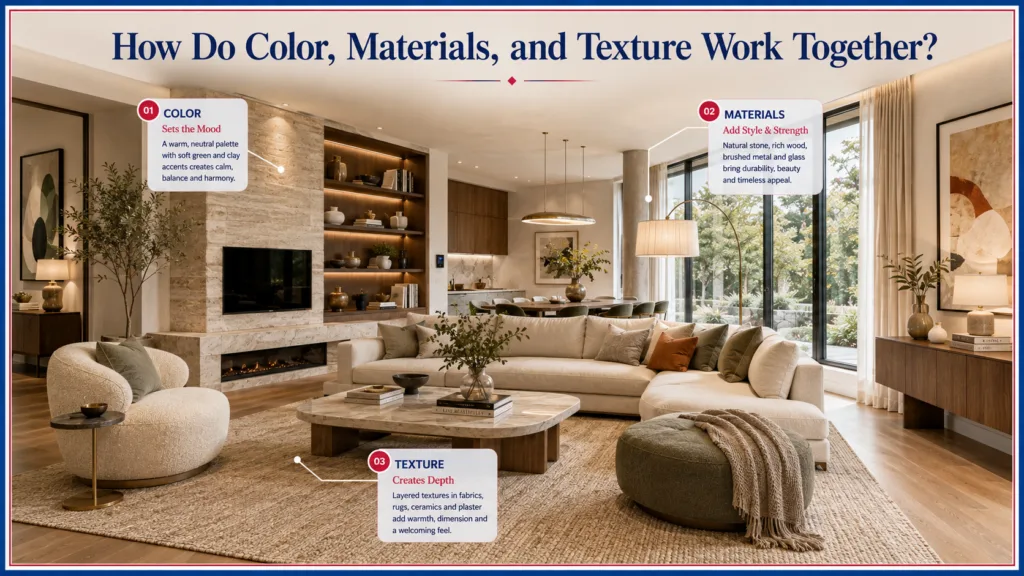
Color, materials, and texture work together to make a room feel complete. Colors set the mood. Materials add strength and style. Texture adds depth.
Choosing Interior Colors
Start with a base color you can live with every day. Repeat it in two or three places so the room feels connected. Use bold color in small doses.
Choosing Interior Materials
Choose materials for the job. Wood warms floors and tables. Stone handles heat and spills. Metal adds shine, and glass lets light through.
Adding Texture
Rugs, curtains, and upholstery add softness. A chunky throw on a smooth sofa gives the eye something to enjoy. Mix two or three textures in every room.
How Can Personal Style Improve an Interior?
A room should reflect the people who use it. Personal style turns a house into a home. Hang artwork you love. Frame family photos. Keep favorite books within reach. Add plants for life and color. Show souvenirs from your travels. Repeat your favorite colors in small ways.
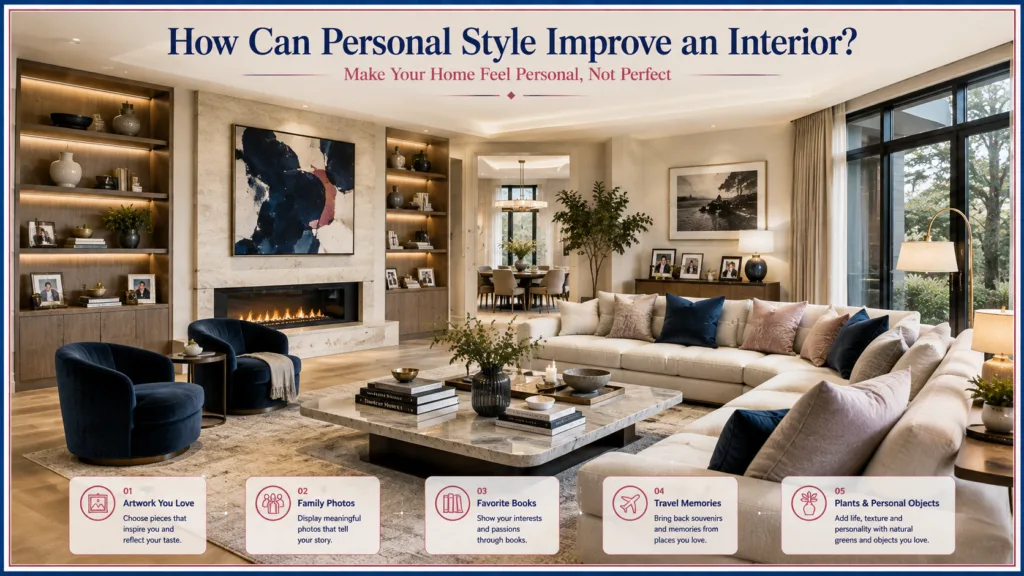
Use decorative pieces sparingly, so each one stands out. Ask yourself one question about each object: does it mean something to me? Swap a few items each season to keep the room fresh.
What Interior Design Mistakes Should You Avoid?
These mistakes waste money and make rooms hard to use.
- Buying before measuring: The sofa may not fit through the door.
- Blocking doors and windows: Furniture in the way makes a room feel tight.
- Choosing oversized furniture: Leave breathing room around every piece.
- Ignoring storage: Clutter will win.
- Using one light source: Add lamps at different heights.
- Using too many colors: Stick to three.
- Mixing too many styles: Pick one main style.
- Adding too much decoration: Leave some empty space.
- Ignoring room proportions: A small print on a big wall looks lost.
How Do You Design a Small Space?
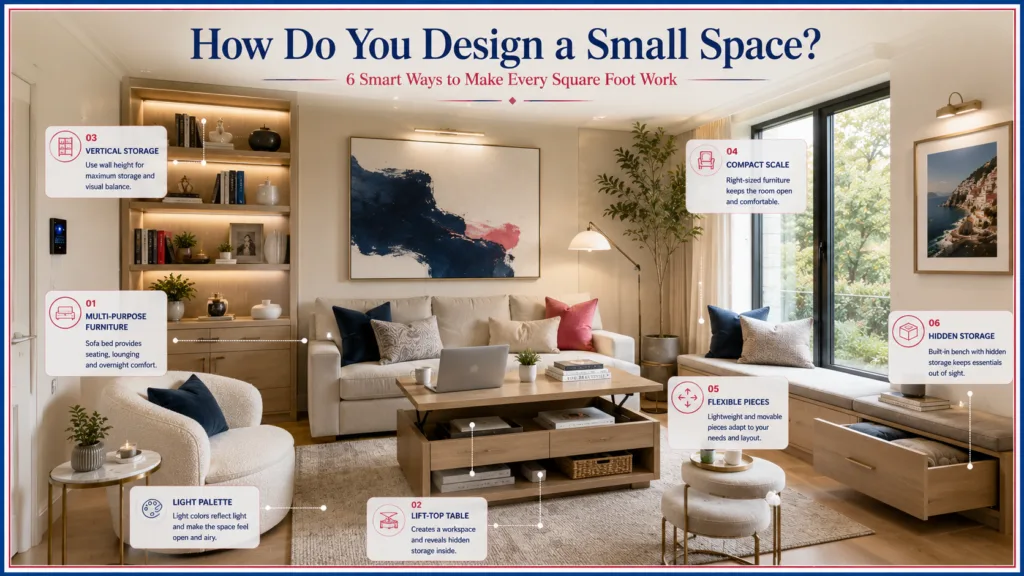
Design a small space by choosing furniture that does more than one job and keeping paths clear.
- Use multi-purpose furniture, such as a sofa bed or a lift-top table.
- Store things up high with vertical storage.
- Pick compact furniture on the right scale.
- Choose flexible pieces you can move.
- Use a light visual palette to make walls feel farther away.
- Use smart storage under beds and stairs.
A small living room still needs one focal point. Choose it first.
How Much Does Interior Design Cost?
Interior design costs depend on how the designer charges. The US figures below combine two 2026 pricing guides, from Fiverr and HomeAdvisor.
| Model | How It Works | Typical US Cost |
| Hourly | Designer charges for time | $50 to $450 per hour, with a $150 average |
| Fixed fee | One agreed design fee | Depends on scope |
| Per room | Fee applies to each room | $450 to $1,500 per room for design only |
| Per square foot | Fee follows project size | $5 to $17 per square foot |
| Percentage | Fee follows project budget | 10% to 15% of total project cost |
Both guides land in a similar range. Fiverr puts the hourly average at $150, while HomeAdvisor reports most residential designers charge $50 to $200 per hour for design time alone.
What Increases Interior Design Costs?
Costs rise with custom furniture, built-ins, premium materials, flooring, lighting, electrical work, and construction. Project management adds cost too. Designers also mark up products and materials, often by 17% to 45%.
How Can You Improve Interior Design on a Budget?
Improve your interior on a budget by keeping what works and spending only where it counts.
- Reuse good furniture.
- Refinish old pieces with paint or stain.
- Paint the walls. It is the cheapest big change.
- Upgrade lighting in the room you use most.
- Buy high-use furniture first, such as a sofa or mattress.
- Mix affordable and premium pieces.
- Add decor slowly, one piece at a time.
Save your splurge for things you touch every day.
Interior Design vs. Interior Decorating
Designers plan how a space works. Decorators style how it looks. Many projects need both.
| Interior Design | Interior Decorating |
| Focuses on how space works | Focuses mainly on appearance |
| Can involve layout planning | Usually works with existing layout |
| Can involve technical planning | Focuses on finishes and decor |
| Considers function and circulation | Focuses on furniture, colors, and accessories |
Interior Design Checklist
Use this list before you start any room.
☐ Define the room’s purpose
☐ Measure the space
☐ Plan the furniture layout
☐ Check circulation space
☐ Plan storage
☐ Review lighting
☐ Choose your colors
☐ Select materials
☐ Set a budget
☐ Add personal details
Check them off one at a time. Then move to the next room.
Final Thoughts
So, what is the most important thing in interior design? Start with function. Plan the space around how you live. Add comfort, check the scale, and layer your lighting. Then choose colors, materials, and furniture that fit the room and your daily needs. Finish with personal details that make the space feel like yours.
If you are planning a room and need more ideas, explore our interior design tips for practical ways to plan, style, and improve your space.
Frequently Asked Questions
What Is the Most Important Thing in Interior Design?
The most important thing is creating a space that works for daily life and feels comfortable, attractive, and personal.
Why Is Functionality Important in Interior Design?
Functionality helps a room support daily activities. It gives furniture a clear purpose and keeps movement easy.
What Is Space Planning in Interior Design?
Space planning is arranging layout, furniture, and walkways before you buy anything. It makes a room easy to use.
Why Does Furniture Scale Matter?
Furniture that fits the room’s size feels balanced. Oversized pieces crowd a room, and tiny pieces look lost.
How Does Lighting Affect a Room?
Lighting shapes mood and use. Layered light from natural, ambient, task, and accent sources makes a room feel complete.
How Do You Choose an Interior Color Palette?
Pick a base color, a supporting color, and an accent color. Test paint samples in your own light.
What Makes an Interior Look Balanced?
Balance comes from good scale, layered lighting, a limited palette, and materials placed evenly around the room.
How Do You Design a Small Room?
Use multi-purpose furniture, vertical storage, and compact pieces. Keep pathways clear and choose light colors.
How Much Does Interior Design Cost?
Hourly rates range from $50 to $450, while per-room design fees run $450 to $1,500 in the US.
What Is the Difference Between Interior Design and Decorating?
Design plans how a space works, including layout and circulation. Decorating focuses mainly on appearance and finishes.