
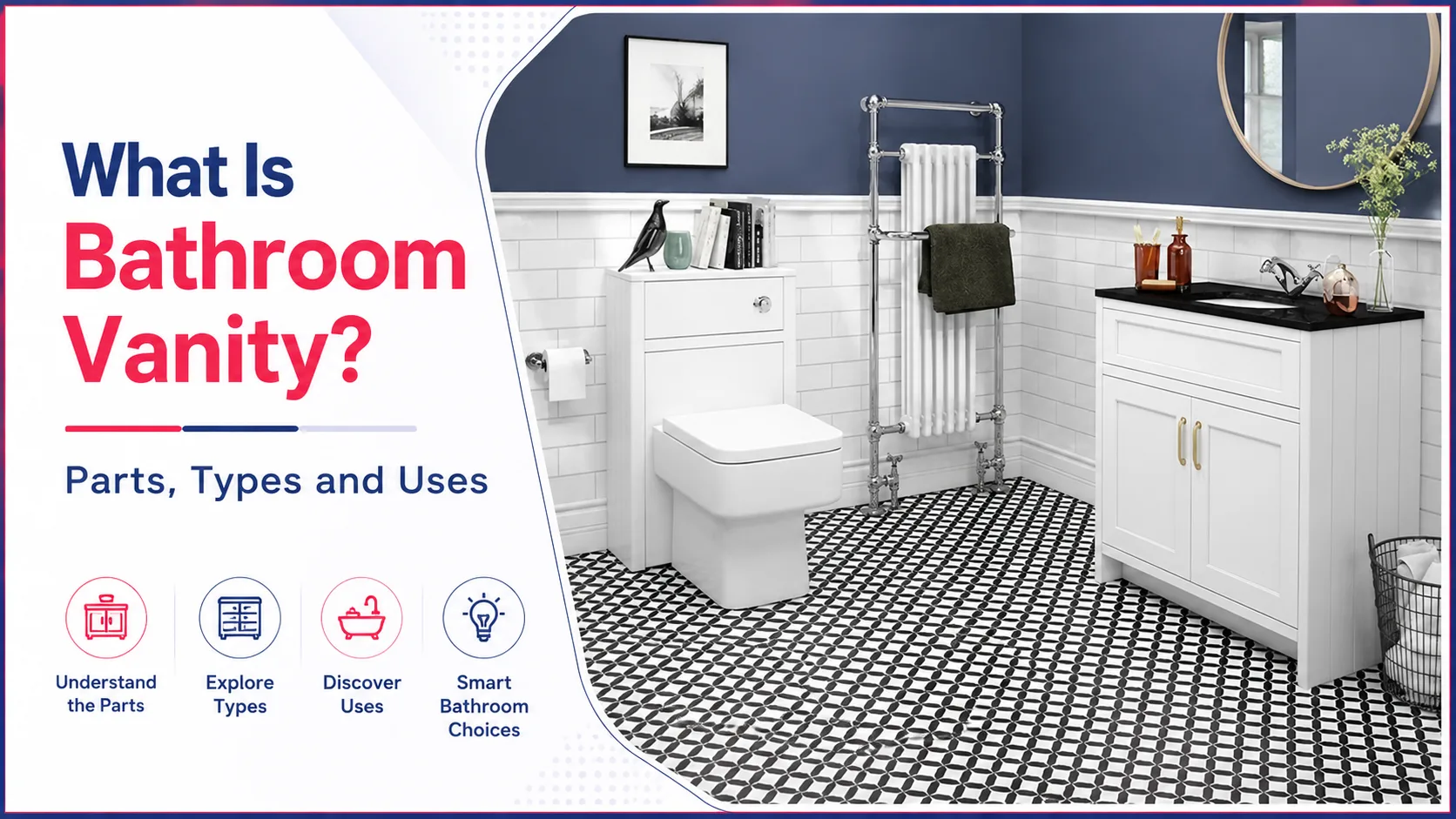
A bathroom vanity is a cabinet that holds a sink and a countertop. It stores towels and toiletries and hides the plumbing. The name comes from the dressing table, also called a vanity, that people once used for grooming.
In a bedroom, the word means a dressing table with a mirror. As a plain word, it means too much pride in your looks. This guide covers the meaning, the history, the parts, the types, the sizes, and the cost.
What Is Bathroom Vanity?
A bathroom vanity is a furniture unit that combines a sink, a countertop, and storage. It does four jobs. It holds the sink. It gives you counter space. It stores towels and toiletries. It hides the plumbing.
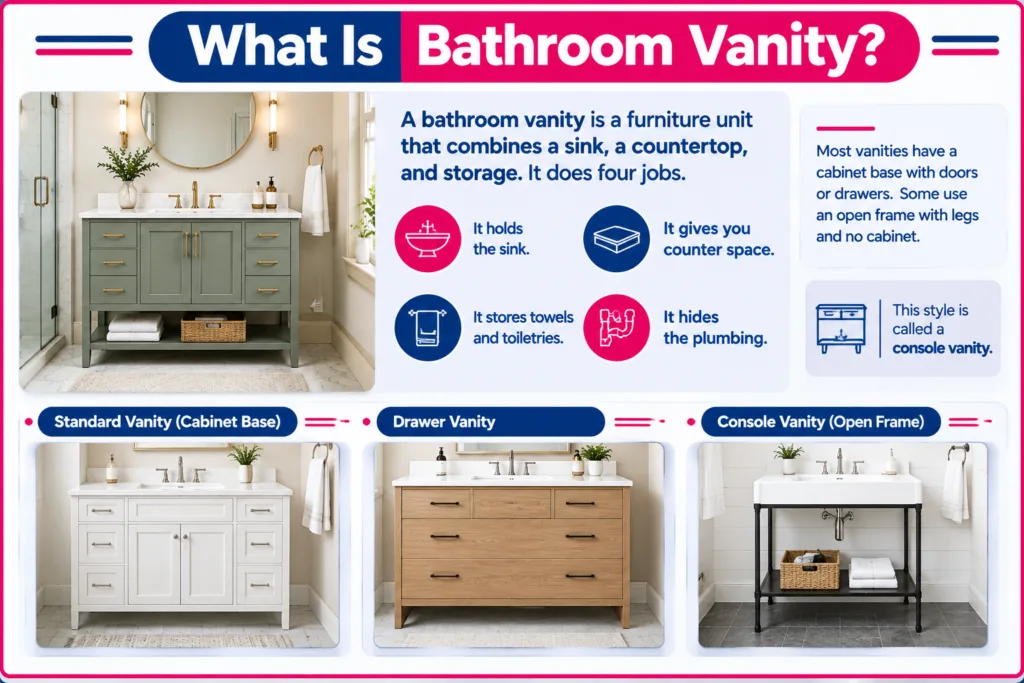
Most vanities have a cabinet base with doors or drawers. Some use an open frame with legs and no cabinet. This style is called a console vanity.
What Does “Vanity” Mean? Three Meanings
The meaning depends on where you see the word.
- Bathroom vanity. A cabinet that holds a sink and a countertop. Most people who search for this word want this meaning.
- Bedroom vanity. A dressing table with a mirror. People sit at it to style their hair and apply makeup.
- The word itself. Vanity means too much pride in your looks or your achievements.
Merriam-Webster lists both furniture senses: a dressing table, and a bathroom cabinet with a sink and, usually, a countertop.
In the UK, shoppers usually say “vanity unit.” British bathrooms are often smaller, so a UK unit is often smaller than a US vanity.
Why Is It Called a Vanity?
The word comes from the Latin vanus, which means empty or useless. By the mid-1300s, it also meant too much pride in your looks.
The name fits the furniture. People used a dressing table to groom themselves, and grooming served their sense of vanity. In the 1700s, they also called it a toilet table. The phrase “vanity table” for a dressing table appears by 1898. In American English, “vanity” and “dressing table” now mean the same thing.

Plumbing changed the piece. Some early dressing tables had a drawer that held a basin for light washing. When toilet tables moved into the bathroom, people began calling them vanities. Over time, the table became a cabinet with a built-in sink.
Main Parts of a Bathroom Vanity
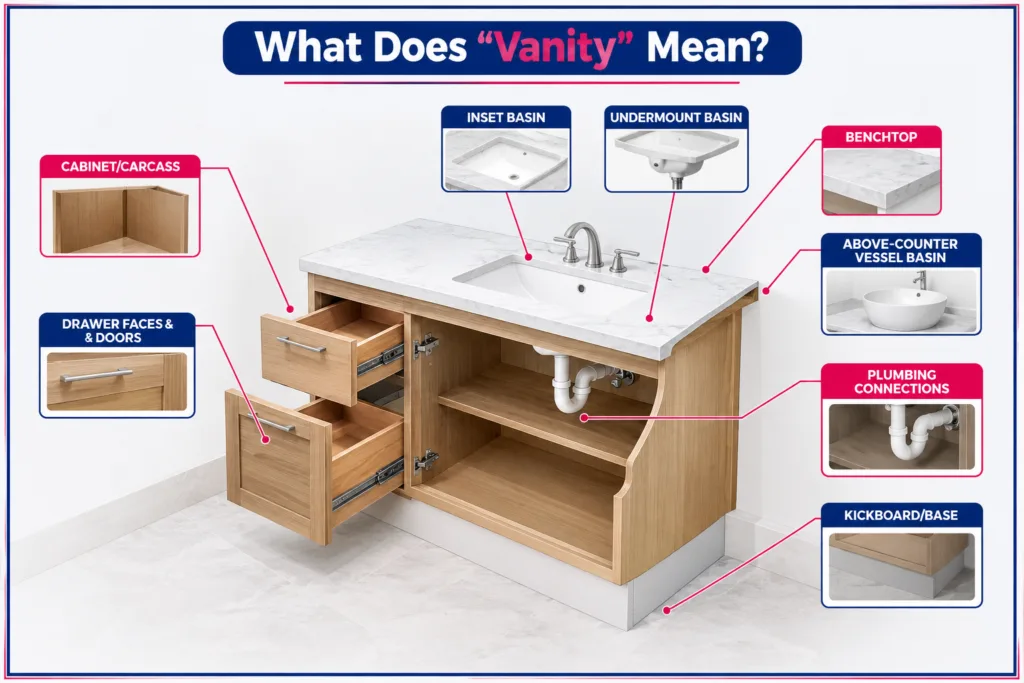
Five parts make a vanity work.
Cabinet. The cabinet supports the countertop and covers the plumbing. It can have doors, drawers, or open shelves. Drawers give you easier access than doors.
Countertop. The countertop gives you space to wash, brush your teeth, and get ready. Quartz resists stains and needs no sealing. Granite is strong and tough. Marble has a unique pattern, but it needs sealing and can etch. Solid surface tops are smooth and easy to clean.
Sink. Three styles are common:
- An undermount sink sits below the countertop for a clean edge.
- A vessel sink sits on top as a bowl.
- An integrated sink shares one surface with the countertop.
Faucet and hardware. These must match the sink style. A vessel sink needs a tall or wall-mounted faucet.
Mirror. Many vanities do not include a mirror, so check the listing before you buy.

Vanity vs. Bathroom Cabinet vs. Pedestal Sink
| Item | What it is | Has a sink? | Storage |
| Vanity | A cabinet with a countertop and a sink | Yes | Yes |
| Bathroom cabinet | A storage unit, such as a medicine or linen cabinet | No | Yes |
| Pedestal sink | A basin on a column | Yes | None |
Types of Bathroom Vanities
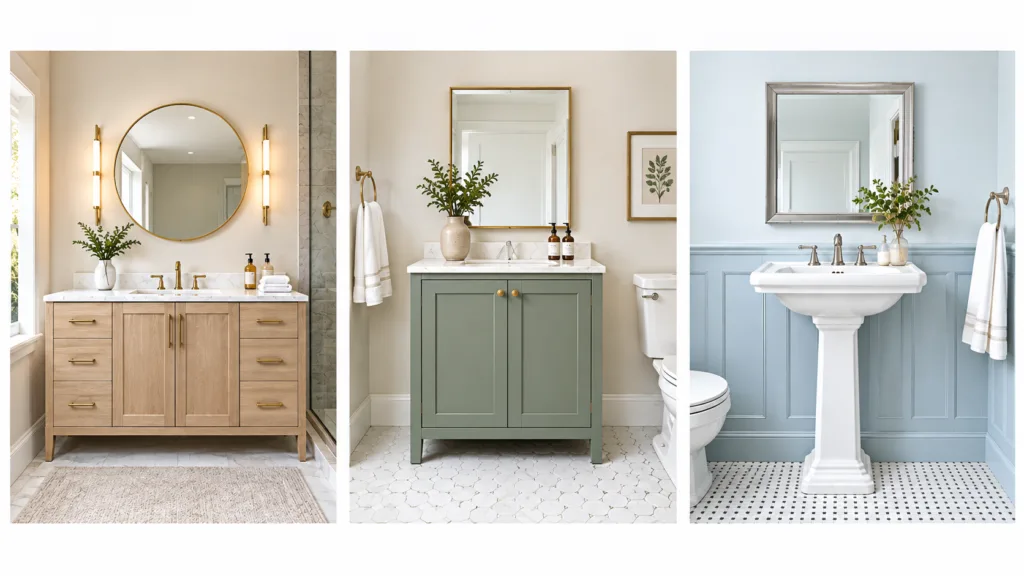
Four types cover most homes.
- Freestanding. A floor cabinet with the most storage. It is the simplest to install when the plumbing stays in place.
- Floating. It hangs on the wall and leaves the floor open, which makes cleaning easy. It needs a wall with studs or blocking for support.
- Single sink. It measures 24 to 48 inches wide and suits guest baths and one user.
- Double sink. It measures 60 to 72 inches wide and suits shared bathrooms.

Our guide to bathroom vanity types compares freestanding, floating, corner, console, and double vanities, plus the main sink styles.
Common Vanity Materials
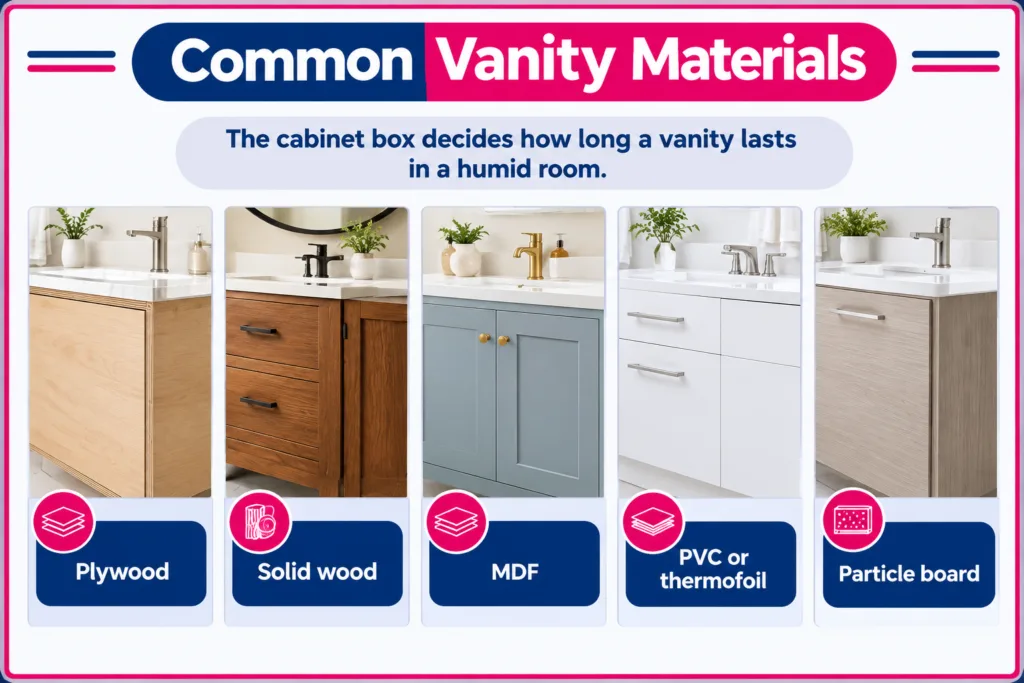
The cabinet box decides how long a vanity lasts in a humid room.
| Material | Verdict |
| Plywood | The best choice for the cabinet box. It handles moisture well. |
| Solid wood | Strong and easy to refinish. It costs more. |
| MDF | Fine for painted fronts. It swells for good if water gets in. |
| PVC or thermofoil | Waterproof, but it comes in fewer styles. |
| Particle board | Avoid it in bathrooms. It crumbles when wet. |
Solid wood also pairs well with custom woodwork in other rooms, such as shelving and built-ins.
Standard Sizes, Heights, and Clearances
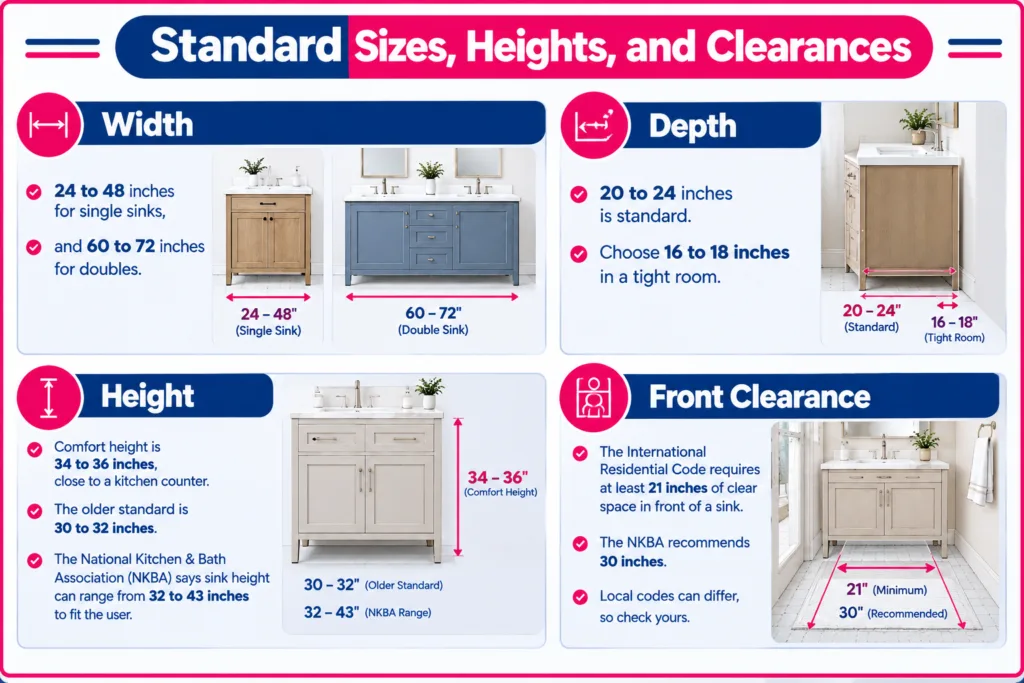
- Width: 24 to 48 inches for single sinks, and 60 to 72 inches for doubles.
- Depth: 20 to 24 inches is standard. Choose 16 to 18 inches in a tight room.
- Height: Comfort height is 34 to 36 inches, close to a kitchen counter. The older standard is 30 to 32 inches. The National Kitchen & Bath Association (NKBA) says sink height can range from 32 to 43 inches to fit the user.
- Front clearance: The International Residential Code requires at least 21 inches of clear space in front of a sink. The NKBA recommends 30 inches. Local codes can differ, so check yours.
How Much Does a Bathroom Vanity Cost?
Many complete installs, vanity included, cost $400 to $2,200. The average is near $1,500. A double, floating, or custom vanity with plumbing changes can reach $4,000 or more. Prices change by city, size, and countertop material.
How to Choose a Bathroom Vanity
- Measure the room. Note the wall length, the door swing, and the distance to the toilet.
- Check the plumbing. Find where the drain and supply lines come out. Moving them adds cost.
- Count the users. Choose a double sink only if two people get ready together and you have 60 inches or more.
- Pick storage and style last. Choose drawers or doors, then the finish and hardware.
A bathroom also follows the same interior design principles as any other room, such as balance, comfort, and a layout that works.
Final Thoughts
A bathroom vanity is a grooming station. It joins a sink, a countertop, and storage in one unit. The name comes from the dressing table that came first. Choose yours by room size, plumbing, and the number of users. Then check the sizes and clearances above before you buy.
Planning a bathroom update? Book a design consultation and we will help you match a vanity to your space.
Frequently Asked Questions
What is a bathroom vanity?
A bathroom vanity is a cabinet that holds a sink and a countertop. It stores towels and toiletries and hides the plumbing.
Why is a bathroom sink cabinet called a vanity?
It took its name from the dressing table, also called a vanity table. When washing and grooming moved into one room, the two names merged.
Is a vanity the same as a sink?
No. A sink is the basin. A vanity is the cabinet and countertop that hold it.
What is the difference between a vanity and a bathroom cabinet?
A vanity holds a sink and a countertop. A bathroom cabinet only stores items, like a medicine cabinet or linen cabinet.
What is a vanity unit?
It is the UK name for a bathroom vanity. It combines a basin with storage and often comes in smaller sizes than US models.
What is a vanity in a bedroom?
It is a dressing table with a mirror, often with a stool. People use it to style hair and apply makeup.
How tall is a bathroom vanity?
Most stand 30 to 36 inches tall. Comfort height, 34 to 36 inches, is common in new homes.
Does a vanity include a mirror?
Often not. Many sellers list the mirror separately, so check the product details.
Which material is best for a vanity?
Plywood makes the best cabinet box in a humid room. Quartz makes a low-maintenance countertop.
How much does a bathroom vanity cost?
Many complete installs run $400 to $2,200, with an average near $1,500. Doubles and custom units cost more.